TRADE SERVICE S.R.L.
INFO & CONTACTS
Trade Service S.R.L.
Specializing in the import/export of tinplate, polymers, food-grade film, and marketing.
info@trade2008.it
+39 06 9295 6860
+39 379 183 0680
TRADE SERVICE S.R.L. @ All Right Reserved 2020
Contact us to discover our import/export services and receive more information.
Products
In addition to the main conveyor belt lines, TRADE SERVICE SRL also manufactures all the necessary complementary accessories — such as aligners, accumulation tables, diverters, rotary tables and elevators. The use of standardized, high-quality components that are easily available on the market simplifies routine maintenance, offering a real advantage to customers and ensuring a high level of satisfaction over time.
Pet Grade 80
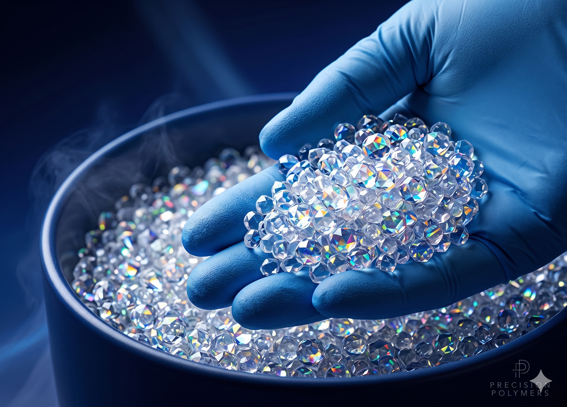
PET grade 80 (often referred to as PET IV 0.80) is a polyethylene terephthalate resin specifically for producing bottles for natural mineral water.
The number "80" refers to the intrinsic viscosity (IV) of 0.80 dL/g, a value that represents the ideal balance between ease of processing (blow molding) and mechanical strength of the finished bottle.
Main Technical Features:
Intrinsic Viscosity (IV): Set at 0.80 ± 0.02 dL/g to ensure stability during production.
Acetaldehyde Content: Must be extremely low (usually ≤ 1.0 ppm) so as not to alter the neutral taste of mineral water.
Optical Properties: High transparency and gloss to enhance the water’s clarity.
Melting Point: Generally between 244°C and 255°C.
Differences vs other PET grades
Depending on the bottle’s contents, the polymer viscosity varies to handle different physical stresses:
PET Grade 80 (IV 0.80): Standard for mineral water and edible oils.
PET for Carbonated Drinks (IV 0.82 - 0.87): Higher viscosity to withstand the internal pressure of gases.
PET for Hot Fill (IV 0.78): Optimized for juices and teas that require thermal resistance during bottling.
Advantages in the industry
Using grade 80 makes it possible to produce very light bottles (about 1/10 the weight of glass) without compromising impact resistance. It is also a fully recyclable material, often reused as R-PET for new bottles.
Plastic Polymers
Plastics originate from the polymerization of base molecules (monomers) that combine to form long molecular chains. They are categorized as follows:
Homopolymers: Composed of a single type of monomer.
Copolymers: Derived from two or more different monomers.
Polymer Alloys: Obtained by blending two polymers that do not chemically react with one another.
Additives (such as plasticizers, colorants, antioxidants, lubricants, etc.) are added to the polymer base to provide the material with the desired characteristics regarding processability, aesthetics, and durability.
Compared to metallic or non-metallic materials, plastics offer numerous advantages: ease of processing, cost-effectiveness, versatile coloring options, thermal, acoustic, and electrical insulation, corrosion resistance, chemical inertness, and impermeability to mold and bacteria.
Thermoplastic plastics
Thermoplastics become malleable when heated and can be molded, subsequently solidifying upon cooling. This process is reversible and repeatable, depending on the specific material grade.
Key Types and Applications:
ABS (Acrylonitrile Butadiene Styrene): Impact-resistant; used for luggage, household appliances, automotive components, and electronic devices.
POM (Polyacetals): Utilized in precision engineering and mechanical components.
PA (Polyamides): Commonly known as Nylon; used for synthetic fibers, mechanical parts, and packaging films.
PBT (Polybutylene Terephthalate): Used in mechanical and electrical sectors, often glass-fiber reinforced.
PC (Polycarbonate): Transparent and high-strength; ideal for helmets, visors, and automotive components.
Other polymers—such as PPO, PE, PPS, PET, PIB, PVDC, PMMA, CPVDC, PP, PVDF, PSU, PS, EPS, ASA, PVA, MBS, PVC, CA, SAN, and EVA—find applications across the mechanical, electrical, electronic, food, construction, automotive, and packaging industries.
Thermosetting Plastics
Thermosetting plastics harden permanently when exposed to heat and cannot be subsequently softened. This hardening results from a three-dimensional cross-linking process that irreversibly alters the molecular structure.
This category includes unsaturated polyester resins (UP), polyurethanes (PU), alkyd resins, allylic resins (DAP), epoxy resins (EP), phenolic resins (PF), furan resins, melamine resins (MF), urea resins (UR), and PTFE (Teflon). These materials are widely utilized in sectors such as electronics, marine engineering, aerospace, and furniture manufacturing.
Transformation Processes
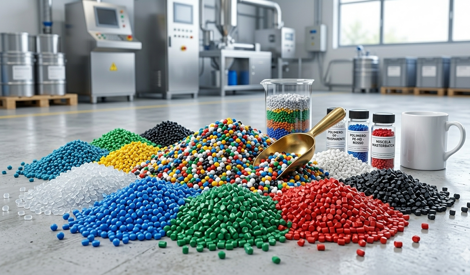
Polymers can be supplied in the form of powders, granules, liquids, or solutions, and are transformed into finished products through the application of heat and pressure.
Main processes: Calendering: Compression of heated plastic material between rollers to obtain sheets of controlled thickness. Extrusion: Forcing molten polymer through a die that defines its shape, followed by cooling to stabilize it. Blow Molding: Inflation of molten material inside a mold to produce hollow bodies (bottles, tanks, etc.). Molding: Casting or injecting material into a mold to obtain the desired shape (compression, layering, injection, rotational). During processing, plastics can be reinforced with glass, carbon, or aramid fibers, creating composites used in sectors such as automotive, marine, and sports.
Settori di applicazione: Imballaggi
In Italia, il settore dell’imballaggio assorbe circa il 47% della produzione di materie plastiche (43% in Europa).
Oltre il 50% degli imballaggi alimentari europei è realizzato in plastica e il 60% pesa meno di 10 grammi.
Negli ultimi vent’anni, il packaging si è alleggerito dell’80%, migliorando al contempo le proprie prestazioni.
La plastica rimane insostituibile grazie alla sua leggerezza, versatilità, resistenza, inerzia chimica ed economicità, caratteristiche che la rendono fondamentale in numerosi ambiti produttivi.




Iscriviti alla Newsletter
Rimani aggiornato su tutte le novità!